
A-03.C · Custom Homes
Lot to keys,
one contractor.
Building a house is the largest single contract most people ever sign. The difference between a good experience and a ruinous one is almost entirely about how the contract and the schedule are written.
What building
a home involves
A custom home is not one project. It is roughly a dozen sequenced trade packages — grading, foundation, framing, roofing, mechanical, electrical, plumbing, insulation, drywall, finish carpentry, and exterior — each of which has to be inspected before the next one can bury it.
A Class B general building licence is what authorises a contractor to coordinate all of that under a single contract. It also means one entity is accountable when a trade gets it wrong, rather than a homeowner arbitrating between subcontractors who have never met.
Because we also hold the C-39, the roof on a house we build is installed by the same licensed entity that framed it. That is a smaller thing than it sounds until something goes wrong at the roof-to-wall intersection and there is nobody to point at.
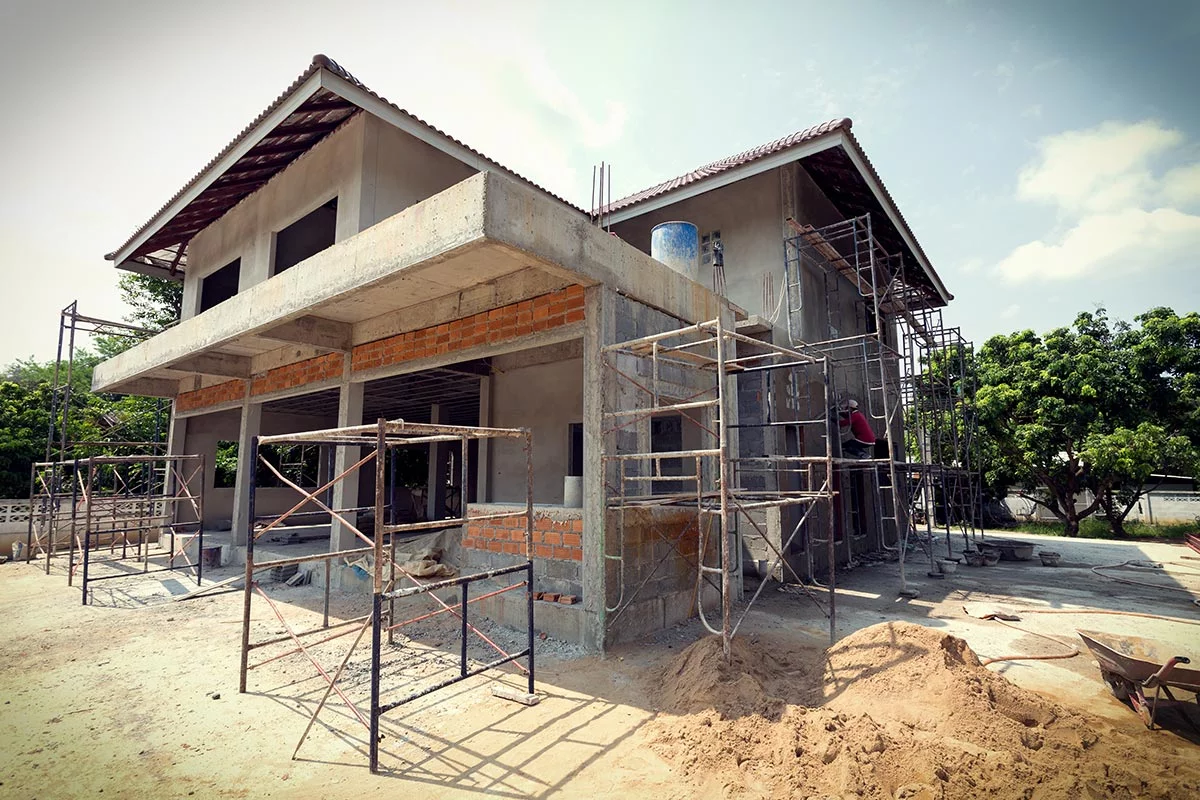
The build
sequence
Six phases, each gated by an inspection. Nothing gets covered until it has been signed off.
- 01
Site and grading
Survey, soils, grading and drainage. Water management around a foundation is decided here, and it is extremely expensive to fix later.
- 02
Foundation
Excavation, forms, reinforcement, pour. Inspected before concrete goes in — rebar placement is not something anyone can verify after the fact.
- 03
Framing and envelope
Structural framing, sheathing, roof structure, windows and doors. The house takes shape here and the framing inspection is one of the most consequential of the build.
- 04
Rough trades
Electrical, plumbing and mechanical rough-in, then insulation. Multiple inspections before any of it is closed up behind drywall.
- 05
Finish
Drywall, interior and exterior finishes, cabinetry, fixtures, flooring. The stage homeowners enjoy and where allowance overruns most often appear if the contract was written loosely.
- 06
Final inspection
Jurisdiction final, certificate of occupancy, and a walkthrough with a written punch list before final payment. We do not ask for the last cheque before the list is closed.
Common questions
A-03.C.4 · Free, no obligation
Get a real number
in writing
Site visit within 48 hours, itemized estimate after. No deposit, no pressure, and no salesperson — you'll be talking to the people who'll do the work.