A-03.B4 · Metal Roofing
Metal roofs,
built for
heat.
High reflectivity, very long service life, and a genuine reduction in cooling load in a climate that spends weeks above 100°F.
What metal
does well
Metal roofing reflects a large share of incident solar radiation rather than absorbing it, which shows up directly in attic temperature and cooling cost. In the Inland Empire that is the single strongest argument for it.
It is also non-combustible, which matters in wildfire-exposed areas, and it has a service life measured in decades with very little maintenance — no granule loss, no membrane to degrade, no tile to crack.
The considerations are up-front cost, thermal movement, and installation quality. Metal expands and contracts substantially with temperature, so panel attachment and seam detail have to accommodate that movement. Where they do not, fasteners work loose and the roof leaks.
Systems and
detailing
Two main systems, and the detailing that determines whether either performs.
- 01
Standing seam
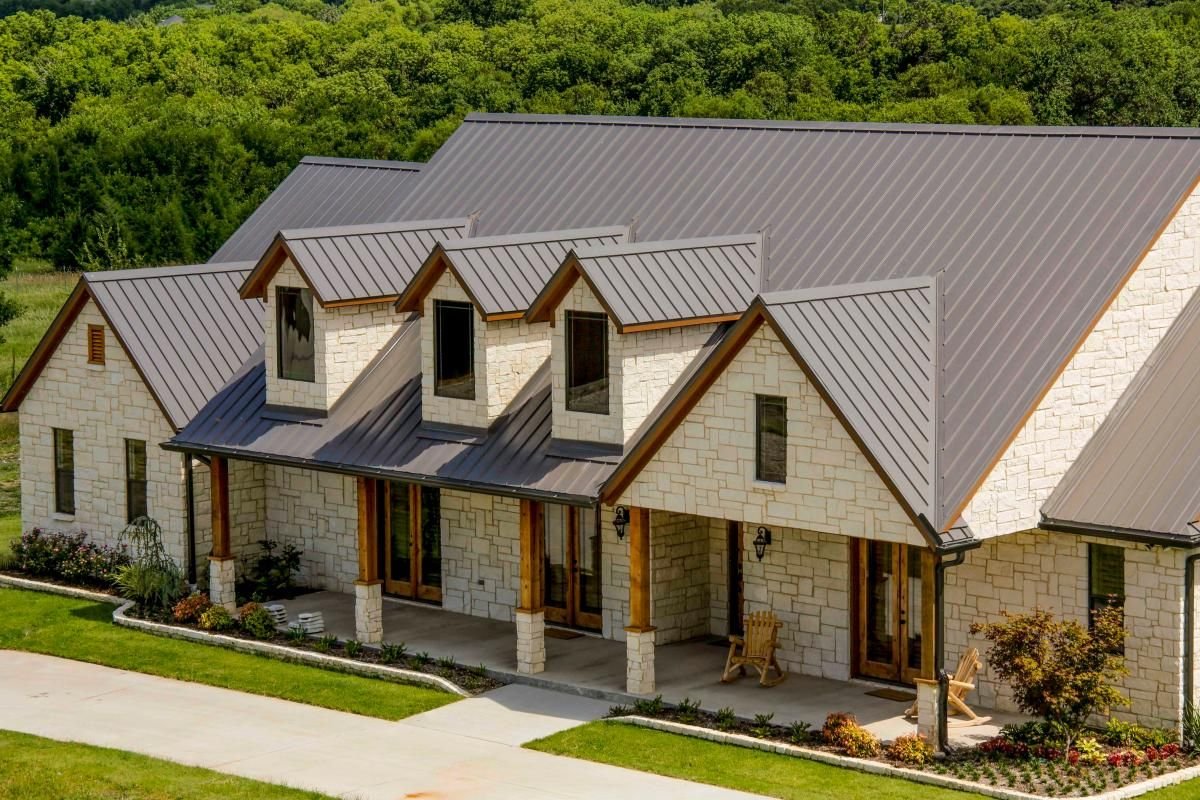
Concealed fastener system with raised, seamed panel joints. No exposed penetrations through the weather surface, which is the primary reason it outperforms exposed-fastener systems over a long service life.
- 02
Exposed fastener panel
Lower cost, faster install, fasteners visible through the panel face with washers that degrade over time and eventually need attention. Appropriate for some outbuildings and budgets; we will be direct about the trade-off.
- 03
Thermal movement
Metal moves measurably with temperature swing. Clip and fastening systems have to allow it. Rigid attachment is a common installation error that shows up as loosened fasteners and leaks years later.
- 04
Underlayment
High-temperature underlayment beneath metal, because the surface gets extremely hot. Standard underlayment under metal in this climate is a specification error.
- 05
Flashing and transitions
Ridges, hips, valleys, eaves and any penetration. As with every roof type, the terminations are where it leaks.
Common questions
A-03.B4.4 · Free, no obligation
Get a real number
in writing
Site visit within 48 hours, itemized estimate after. No deposit, no pressure, and no salesperson — you'll be talking to the people who'll do the work.