
A-03.B3 · Flat Roofing
Flat roofs
fail from
drainage.
Not membrane brand, not sun, not age. Standing water is what destroys a low-slope roof, and drainage is a design problem before it is a materials problem.
Where flat
roofs are used
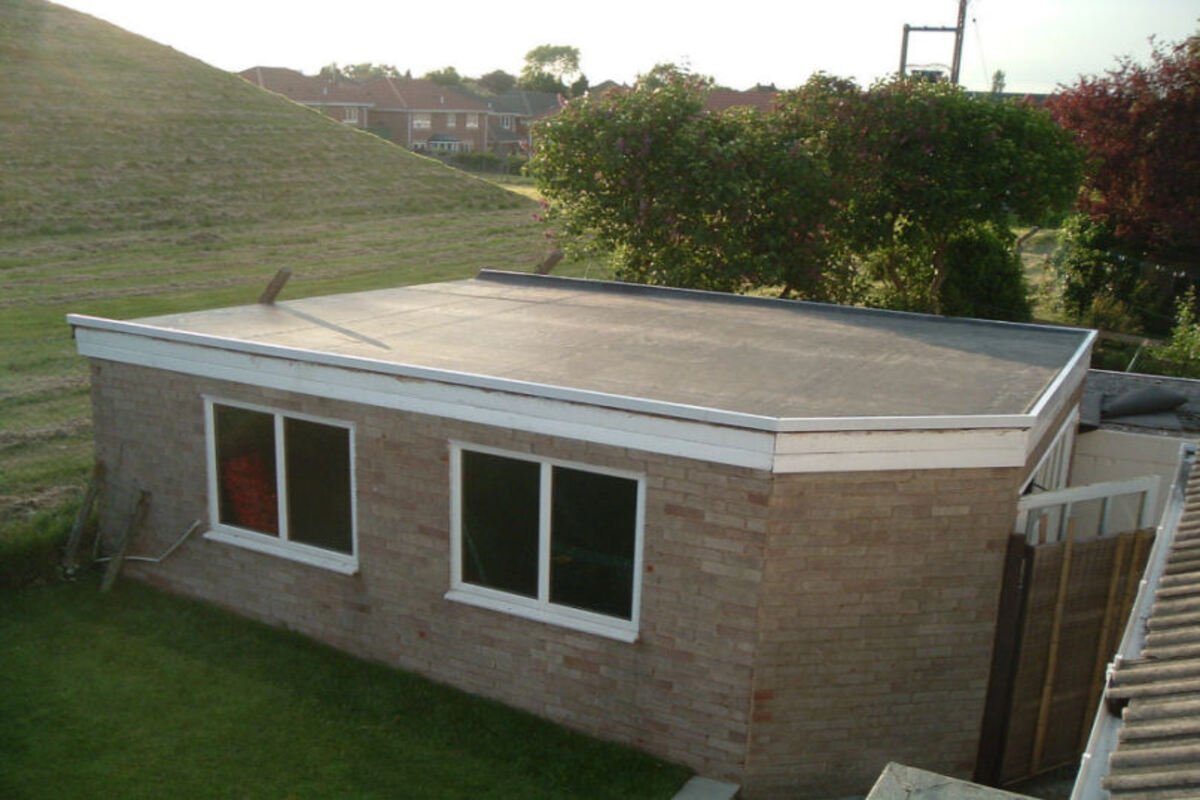
Low-slope and flat roofing covers commercial buildings, warehouse and retail structures, room additions where a pitched roof will not tie in, patio covers, and contemporary residential architecture.
‘Flat’ is a misnomer. A properly built low-slope roof has deliberate fall toward drains or scuppers. Where that fall is inadequate, or where drains are undersized or blocked, water sits — and a membrane that would have lasted decades under moving water fails under standing water.
So the first thing we look at is not the membrane. It is where the water goes and how fast.
How we build
a low-slope roof
Five stages. The second one is the one most contractors skip.
- 01
Survey and drainage
Slope, drains, scuppers and existing ponding evidence. Where fall is inadequate we address it with tapered insulation or structural correction rather than laying new membrane over the same problem.
- 02
Deck evaluation
Low-slope decks that have held water often have concealed rot or saturated insulation. This gets found and dealt with, not covered over.
- 03
Tear-off or overlay
Depending on the number of existing layers, their condition and code limits. We tell you which is appropriate and why, rather than defaulting to whichever is cheaper for us.
- 04
Membrane installation
TPO or modified bitumen depending on the building, exposure and budget. Seam quality is the whole game on a membrane roof and it is entirely a workmanship variable.
- 05
Flashing and terminations
Parapets, curbs, penetrations, drains and edge metal. Nearly every flat roof leak is at a termination or penetration rather than in the middle of the field.
Common questions
A-03.B3.4 · Free, no obligation
Get a real number
in writing
Site visit within 48 hours, itemized estimate after. No deposit, no pressure, and no salesperson — you'll be talking to the people who'll do the work.